
Call us now :07971190807
 Send Inquiry
Ghee Plants
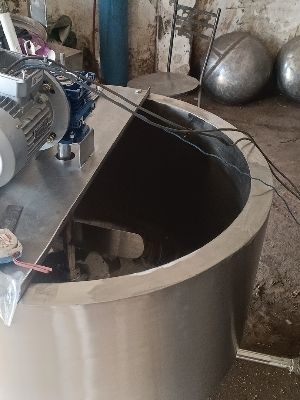

Ghee Plants Specification
- Product Type
- Dairy plant
- General Use
- Commercial use
- Material
- Stainless Steel
- Type
- Dairy Milk Plant Machinery, Milk Production Plant, Dairy Production Machine
- Weight (kg)
- 1000 Kilograms (kg)
- Computerized
- No
- Automatic
- No
- Control System
- Manual
- Cleaning System
- CIP Cleaning System
- Cooling Mode
- Other
- Sterilization Method
- Other
- Motor Power
- 40 hp Horsepower (HP)
- Voltage
- 3 phase Volt (v)
- Dimension (L*W*H)
- 2000m Millimeter (mm)
- Feature
- Good Quality, Low Energy Consumption, High Efficiency, Pasteurizer, Homogenizer, Environmental Friendly
- Color
- Stainless Steel
Ghee Plants Trade Information
- Minimum Order Quantity
- 1 Quintal
- FOB Port
- Noida
- Supply Ability
- 1 Quintal Per Week
- Delivery Time
- 8 Week
- Sample Policy
- Sample costs shipping and taxes has to be paid by the buyer
- Main Export Market(s)
- Asia, Australia, Central America, North America, Eastern Europe, South America, Western Europe, Africa
- Main Domestic Market
- All India
About Ghee Plants
A ghee plant is a specialised establishment for the manufacturing of ghee, a clarified butter used in traditional medicine and cookery. The facility receives butter or cream, which is processed through a number of stages to separate the pure fat from contaminants. Melting, heating, clarifying, filtration, and packing are some of these procedures. Modern machinery and technology are often used in ghee facilities to enable effective production and preserve product quality. Throughout the procedure, stringent quality control measures are put in place to guarantee purity and adherence to food safety regulations. The need for ghee, a well-liked component recognized for its robust flavour and a variety of culinary and therapeutic uses, is significantly met by ghee plants.
High-Quality, Efficient Dairy Processing
Designed for demanding commercial applications, this ghee plant combines strength and efficiency. Its stainless steel build ensures longevity and cleanliness, while advanced features like the CIP system and homogenizer boost productivity. Operators benefit from a manual control system that provides hands-on management and consistent results, making it suitable even for high-volume processing.
Energy-Saving and Environmentally Friendly Features
With a powerful 40 HP motor and energy-efficient design, this dairy plant significantly reduces operational costs. The inclusion of environmentally friendly processes such as pasteurization and automated cleaning supports sustainable production, aligning with modern ecological standards and helping businesses minimize their carbon footprint.
Advanced Cleaning and Maintenance with CIP System
The built-in CIP (Clean-in-Place) cleaning system allows routine sanitation without disassembling equipment. This feature streamlines maintenance, reduces labor costs, and ensures products remain contaminant-free, upholding hygiene requirements crucial for dairy production. Its application enhances equipment longevity and operational safety.
FAQ's of Ghee Plants:
Q: How does the CIP cleaning system work in the ghee plant?
A: The CIP (Clean-in-Place) cleaning system enables internal cleaning of the plant's pipelines and processing equipment without dismantling. It automates rinsing, washing, and sanitization, enhancing hygiene, preventing cross-contamination, and saving time and labor during maintenance.Q: What are the advantages of using stainless steel for this machinery?
A: Stainless steel is used for its resistance to corrosion, ease of cleaning, and durability. It maintains product safety and hygiene essential for dairy processing and withstands the demands of commercial environments, ensuring a longer equipment lifespan.Q: When should the cleaning process be performed on the ghee plant?
A: Cleaning with the CIP system should be carried out after each production batch or as per the standard operating procedures mandated by food safety regulations. Frequent cleaning maintains hygiene standards and preserves the quality of dairy products.Q: Where is this ghee plant with CIP system most commonly used?
A: This machinery is widely used in commercial dairy facilities such as milk processing plants, ghee production units, and large-scale dairy manufacturing operations, especially in India by exporters, manufacturers, and service providers.Q: What benefits does the manual control system offer?
A: The manual control system allows operators direct oversight and precise adjustment during processing. This flexibility can be useful for customizing production cycles, minimizing errors, and ensuring consistent quality in end products.Q: Why is the plant considered environmentally friendly?
A: The plant is equipped with energy-saving features, like a highly efficient motor and automated cleaning, reducing water and chemical usage. These factors lower overall environmental impact, making the operation sustainable and eco-conscious.Q: How does having a pasteurizer and homogenizer in the plant benefit dairy production?
A: Including pasteurizer and homogenizer functions ensures that dairy products are safe for consumption, have uniform consistency, and extended shelf life. These processes also help comply with industry standards and improve the final product's quality.Tell us about your requirement

Price:
Quantity
Select Unit
- 50
- 100
- 200
- 250
- 500
- 1000+
Additional detail
Mobile number
Email

More Products in Dairy Products Machinery Category
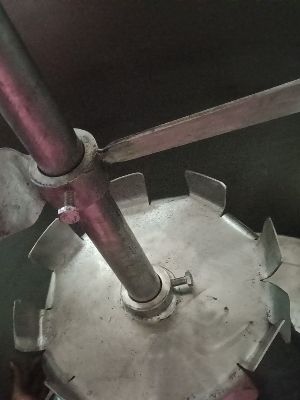
Milk Powder Mixing Venturi
Price 45000.00 INR / Piece
Minimum Order Quantity : 1 Number
Automatic : No
Color : Silver
Cooling Mode : Other
Product Type : Milk powder mixing with water
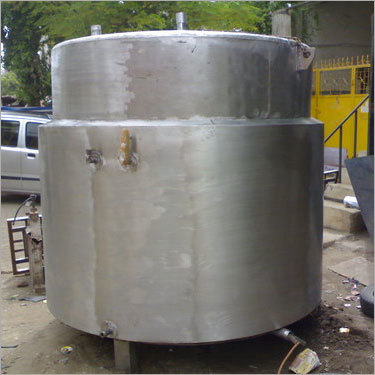
HAKKA NOODLES PLANTS
Price 4500000 INR / Piece
Minimum Order Quantity : 1 Piece
Automatic : Yes
Color : AS PER NORMS
Cooling Mode : Water Cooling
Product Type : AS PER CLIENTS REQUIRMENTS
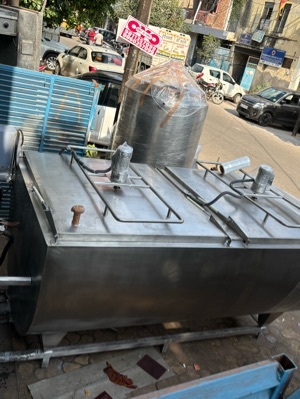
Bulk Milk Cooler Horizontal Type
Price 50000.00 INR / Unit
Minimum Order Quantity : 1 Unit
Automatic : No
Color : SS
Cooling Mode : Other
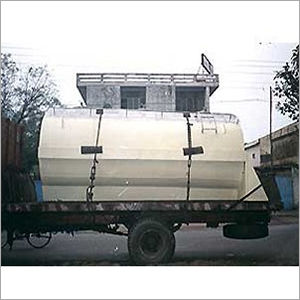
Milk Transportation Tanker
Price 250000 INR / Piece
Minimum Order Quantity : 1 Piece
Automatic : Yes
Color : Sliver
Cooling Mode : Air Cooling
Product Type : Milk Transportation Tanker

 Send Inquiry
Our Products


Plot No 349, Sector-10, Noida - 201301, Uttar Pradesh, India

Sales Executive
(CEO )
Mobile :07971190807
 Send Inquiry
 Send SMS
 Call Me Free
Developed and Managed by Infocom Network Private Limited.
